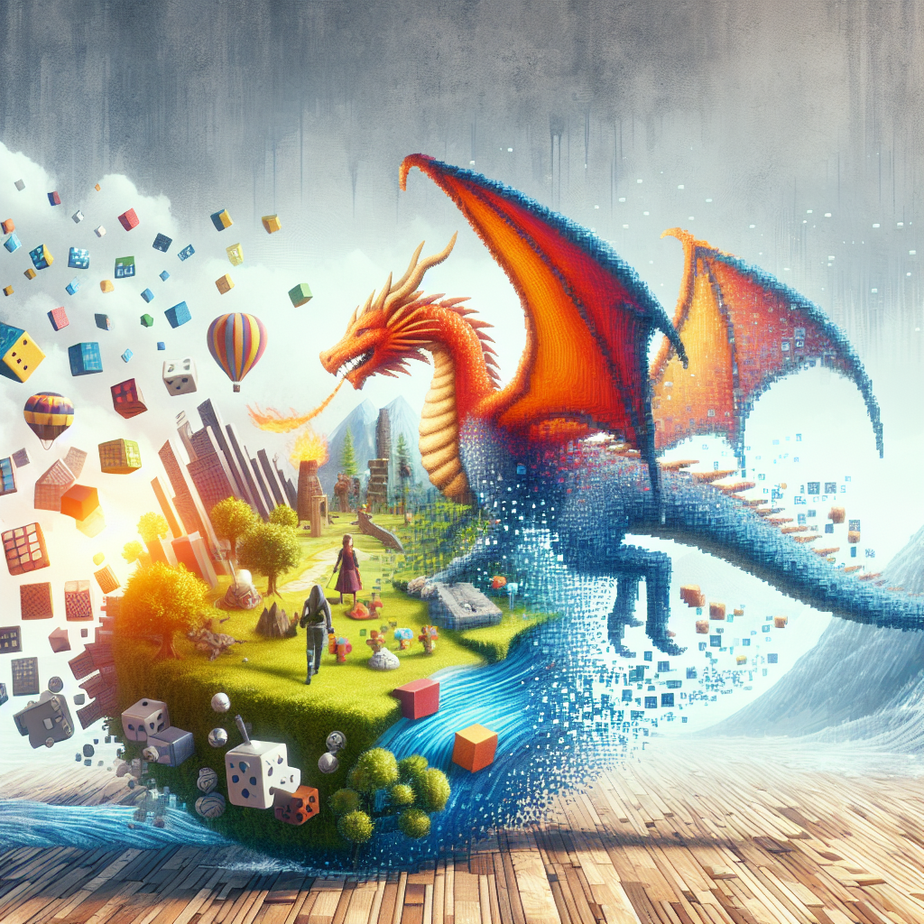
In the realm of video game design, authenticity often comes from unexpected places. Square Enix’s latest move with the remake of Dragon Quest 7 Reimagined takes inspiration from reality, using real-life models to shape the virtual world. While the legacy of the late Akira Toriyama’s art style is celebrated and revered within the Dragon Quest series, the new creative direction sparked curiosity and conversation as series creator Yuji Horii unveiled the creative process behind the game in a recent video presentation.
In this remake, characters such as the Hero and Kiefer aren’t purely born from digital artistry and imagination. Square Enix has taken an innovative step by crafting physical models of these characters and scanning them into the digital realm. This approach marks a significant departure from traditional methods and serves to blur the line between the real and virtual worlds. Fans have expressed mixed feelings, with some appreciating the depth and dimension it adds, while others long for the nostalgic touch of Toriyama’s original drawings.
The decision to incorporate real-life models introduces a unique diorama style that enhances the game’s visuals, providing a fresh perspective. Such an undertaking isn’t just about aesthetic novelty—it enriches the sense of engagement and immersion for players. By employing physical models, developers ensure that textures, proportions, and lighting resonate more genuinely, enhancing the overall storytelling experience.
Yet, this artistic choice invites us to ponder the balance between innovation and tradition. Toriyama’s distinctive style has carved a niche that fans cherish, often described as a comforting constant in the evolving landscape of Dragon Quest. The reimagined characters challenge this constancy, presenting an opportunity for the franchise to evolve while paying homage to its roots. It’s a testament to the dynamic nature of game development, where honoring the past and embracing the future must coexist.
In conclusion, Dragon Quest 7 Reimagined’s decision to use real-life models underscores the evolving art of game design. This blend of physical modeling with digital artistry showcases a progressive leap in how characters can be conceptualized and brought to life. As much as it provokes nostalgia, it also exemplifies the potential of innovative approaches to redefine what players can expect from reimagined classics. The marriage of these worlds ultimately opens up new avenues for creativity, inviting players to experience beloved stories through a fresh lens.