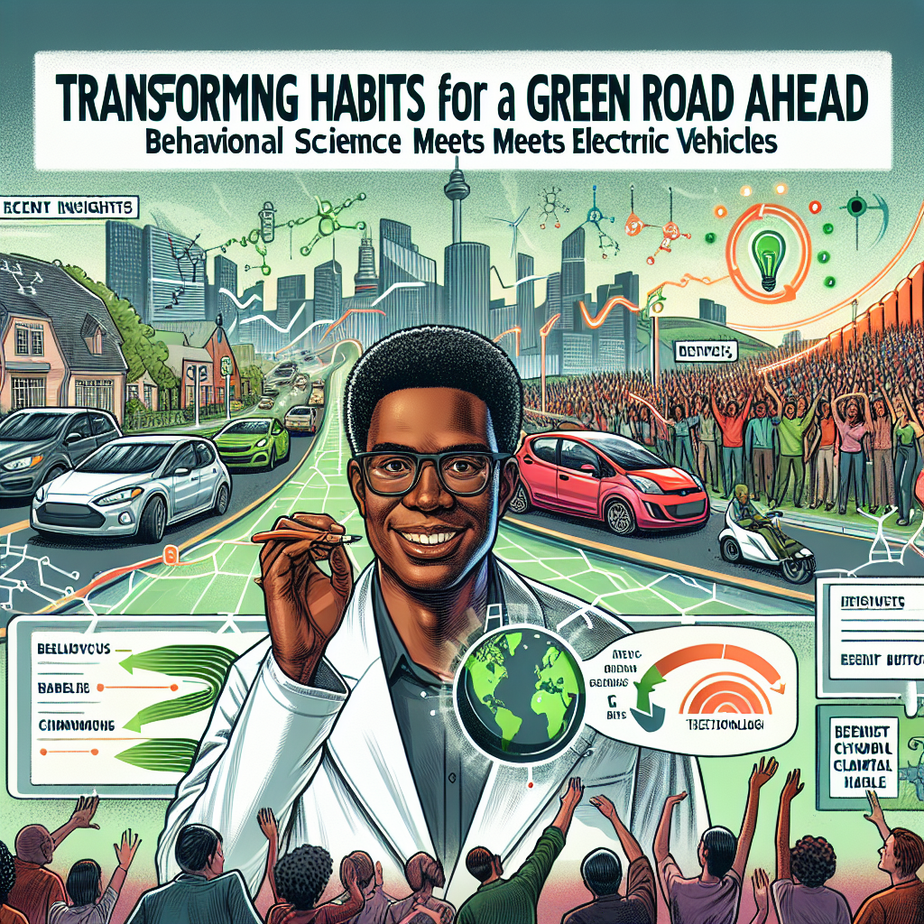
As the global community continues to rally against climate change, breakthroughs in technology are often heralded as the saving grace for our planet’s future. However, recent insights from the Toyota Research Institute (TRI) suggest that the key to unlocking even more significant carbon reductions might lie not just in technological advancements, but also in understanding the human element—specifically, our behaviors and how they can be nudged towards more sustainable choices.
The studies conducted by TRI in both the United States and Japan introduce a fresh perspective on addressing carbon emissions. They propose that leveraging behavioral science to design interventions can lead us to use electric vehicles (EVs) more efficiently and effectively. Imagine a future where drivers are not only more inclined to choose EVs but are also educated on optimal driving and charging habits. Such foresight could dramatically decrease individual carbon footprints beyond the switch to electric alone.
Consider the potential impact of simple behavioral adjustments—drivers can be incentivized to charge their vehicles during off-peak hours, reducing strain on the power grid and utilizing cleaner energy forms. Similarly, educating drivers about efficient route planning and enhanced vehicle maintenance can extend battery life and energy efficiency, ultimately promoting more sustainable driving habits. Toyota’s studies show that when drivers change these behaviors, the results are tangible, translating to significant reductions in energy consumption and emissions.
This research comes at a pivotal moment, as the world grapples with the realities of climate change and the urgent need to reduce carbon emissions. The findings offer a promising avenue that complements existing technological advancements in the EV sector. This dual approach—integrating innovative technology with informed behavioral changes—holds the promise of achieving even greater environmental impacts than technology alone.
In conclusion, while electric vehicles represent a significant step forward in reducing transportation-related emissions, the true potential lies in combining these technological advancements with strategic behavioral interventions. If we can harness the power of human behavior, we can pave the way to a future where carbon neutrality is more than a distant dream—it’s a likely reality, driven by a synergy of innovation and informed action.